How AI-powered Functional Prototypes are Transforming Product Development
Discover how AI-powered functional prototypes are revolutionizing product development. Chris Nicol, VP of Product at Xelix, shares practical insights on moving beyond traditional clickable mocks to build confidence faster and make better product decisions.
Welcome to another edition of Mentor Insights on mentor.sh – where experienced professionals share their expertise to help accelerate your career growth. Today, we're diving deep into how AI is revolutionizing product development through functional prototypes.
In the fast-paced world of product development, building confidence in your decisions before committing resources is crucial. Our featured mentor, Chris Nicol, VP of Product at Xelix, shares his insights on how AI-powered functional prototypes are changing the game for product teams worldwide.
Whether you're a seasoned product manager or just starting your journey in product development, this article will provide valuable insights into modern prototyping techniques that can significantly improve your product discovery process.
Introduction
Over the years, I've come to realise that confidence is the real currency of product development.
Every product team I've worked with, or known, has faced the same tension—too many priorities, too many options, and the pressure to pick the right thing to build. We aim to create measurable value for both our customers and the business. But the uncomfortable truth is that you never truly know if you've built the right thing until you ship it.
By then, it's expensive in terms of time, money, and opportunity cost.
That's why so much of our craft is about increasing confidence before we build. Our discovery process is key; it's how we build confidence. We talk to customers. We review data. We brainstorm. We iterate. We test ideas.
User testing is one of the best ways of building that confidence. We get to sit in front of the very people who will use this product and get direct feedback on our ideas.
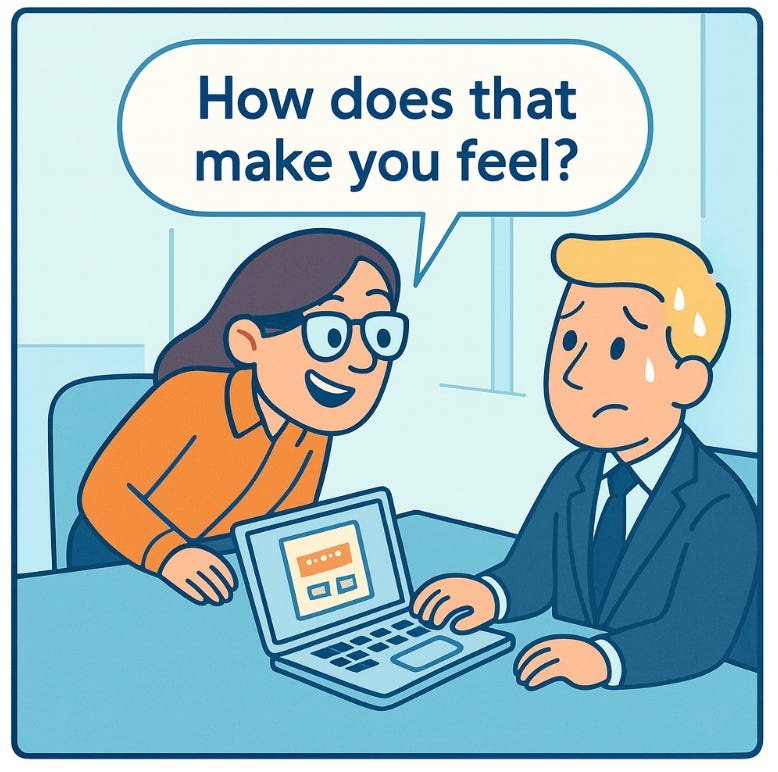
But here's where it often breaks down: traditional user testing with clickable prototypes rarely reflects reality. Customers feel the pressure of being watched during a call. The path of the prototype is predetermined. The data and flow don't reflect reality. It's somewhat of a "scripted rehearsal", and we make decisions based on that staged performance.
Limitations of Traditional Clickable Prototypes
If you've ever run moderated testing with clickable mocks, you'll know how much effort it takes to even get to the session.
Booking customers is hard. People don't want to give up their time. Calendars don't align. No-shows happen.
And when you do get them in the (virtual) room, the prototype is a defined path, with limited interaction. No real data. No actual behaviours. No opportunity for them to explore naturally. How many times have you said, "Sorry, that's just a limitation of the prototype", or "You can just ignore that"?
Don't get me wrong, user testing is very valuable, but it still doesn't give us the level of confidence we want or need.
User testing puts pressure on the customer and can affect the results significantly.
Enter AI-powered Functional Prototypes
The introduction of "vibe coding" has been revolutionary. With tools like V0, Loveable, and Cursor, we can spin up realistic, working prototypes in just a few hours. Buttons actually work. Flows connect. Users can explore freely.
And if we need real data to test a hypothesis properly, we can hook these prototypes up to a live database with customer data.
My teams at Xelix have instantly adopted these tools, just like many other product teams. We had a hackathon earlier in the year. Instead of mocking up a new dashboard in Figma, we built the entire thing in a single day: dashboard, settings, table view. When we tested it with customers, we discovered a small part of the settings screen was critical to them. Something we'd assumed was just background detail. We also got to see how they filtered and ordered columns on the table view.
Those learnings wouldn't have emerged from a clickable mock of a dashboard with a clickthrough to a static table.
Now, functional prototypes have become part of our normal workflow. We build them. We throw them away. We build them again. And our confidence grows faster than it ever did before.
Rethinking the PDLC
For most of my career, the product lifecycle has looked like this:
- Discovery – interviews, data review, surveys, research.
- Ideation – sketches → wireframes → clickable mocks → user testing.
- Build – finally, commit to development.
- ...Profit
Functional prototypes don't just fit into this process—they reshape it.
They allow us to bring working ideas into discovery conversations, compress the ideation phase, and receive better-quality feedback earlier. And they're not just for user testing—they've become one of my most effective tools for communication.
When you show a stakeholder a working version instead of describing a concept, the conversation changes. Google's head of product, Madhu Gurumurthy, recently posted about how their teams are shifting from a writing-first culture to using prototypes to "show, not tell." I've seen the same shift work wonders inside my teams.
The benefits stack up quickly:
- Better feedback from more realistic interactions.
- Higher confidence earlier, avoiding premature investment in high-fidelity mocks.
- Faster iteration cycles, reducing endless design review loops.
- Wider ownership because PMs, Designers, and Engineers can all lead prototyping.
Making Prototypes Work Harder with Analytics
I'm exploring the idea of embedding analytics directly into functional prototypes. One of our teams will be experimenting with this soon, and I'm excited about the potential for it to significantly improve the volume and quality of our user testing.
The idea is simple:
- Ship a functional prototype to customers.
- Bake in analytics: PostHog, Fullstory, or Mixpanel.
- Let customers explore on their own terms—no scheduling drama, no performance pressure.
Then review:
Session replays to see what people actually do. Review data to spot trends, drop-offs, and unexpected paths.
Yes, you lose some of the immediate "why" that comes from moderated sessions. But you can run targeted follow-up sessions with customers:
- "Why did you click here?"
- "What were you expecting at this step?"
- "Why did you stop there?"
This could make testing more natural, scalable, and still give you the depth when you need it.
The New Confidence Curve
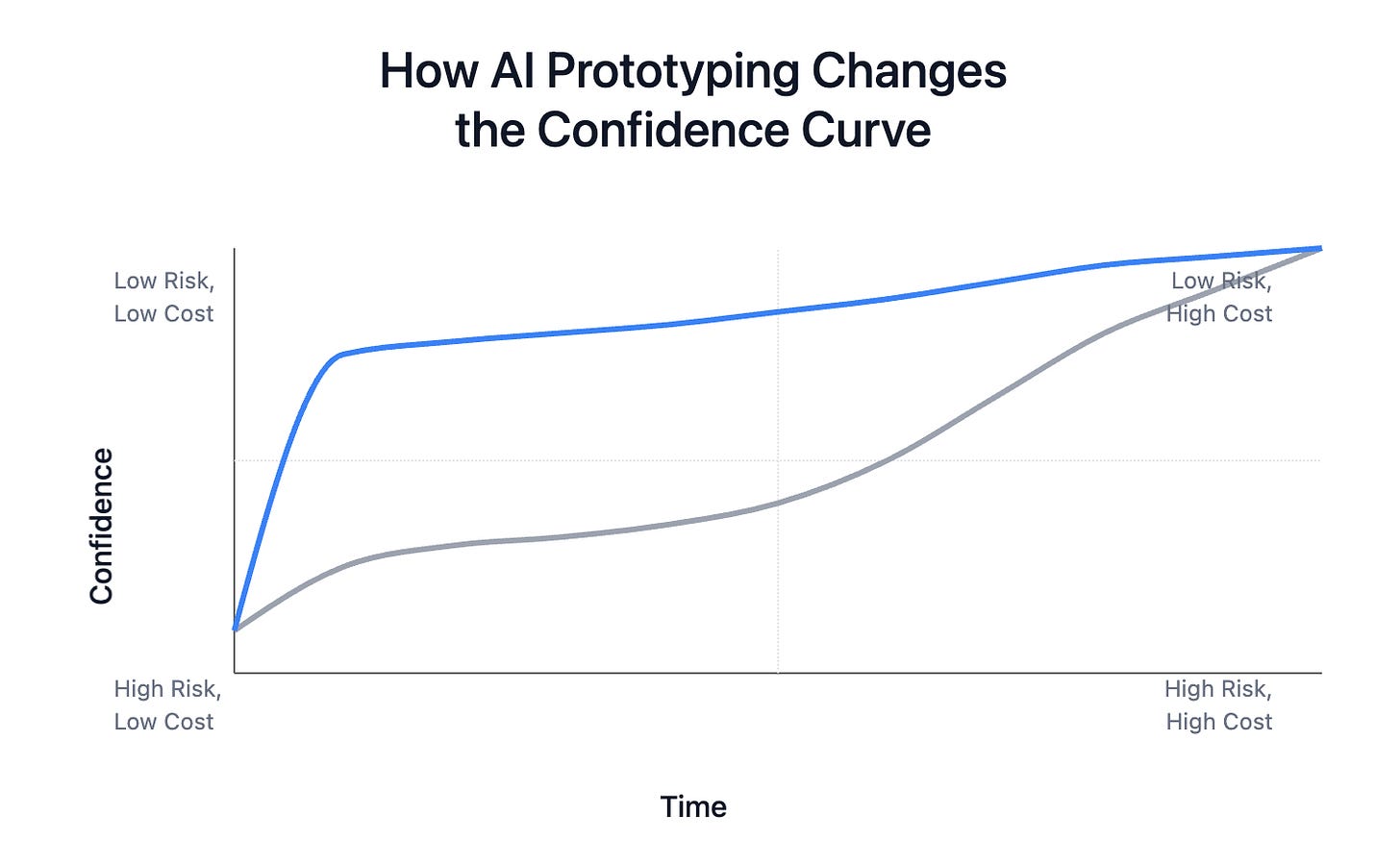
For me, functional prototypes have changed the confidence curve.
They move us from slow, expensive, and artificial validation to fast, authentic, and data-backed learning loops. They bridge the gap between assumption and evidence—without the full cost of building.
In the world of product teams, building the right product is the difference between success and failure. Functional prototypes aren't just a nice-to-have; they're essential to building confidence and making the right bets.
About the Author

Chris Nicol is VP of Product at Xelix and an experienced Product Leader and Coach with over 20 years of experience building B2B SaaS products, scaling startups from $3M to $50M ARR. He's passionate about optimising product development lifecycles and fostering cultures of innovation.
Chris has hands-on experience building AI into products (Agentic AI, ML, GenAI) and introducing these technologies directly into teams to dramatically increase productivity. He specializes in elevating product leadership, crafting product strategies, and implementing AI-driven methodologies to streamline workflows.
Connect with Chris on mentor.sh to learn more about product leadership, AI implementation, and team optimization strategies.
About mentor.sh
mentor.sh is the premier platform connecting ambitious professionals with industry experts for personalized mentorship. Whether you're looking to advance your career, transition into product management, or scale your startup, our curated network of mentors provides the guidance you need.
Explore More Resources:
- Browse mentors from leading tech companies like Xelix
- Discover our comprehensive Content Hub for more insights
- Join our interactive Group Sessions for collaborative learning
- Submit your own insights through our Marketing Hub
Ready to accelerate your career? Find your perfect mentor today at mentor.sh.